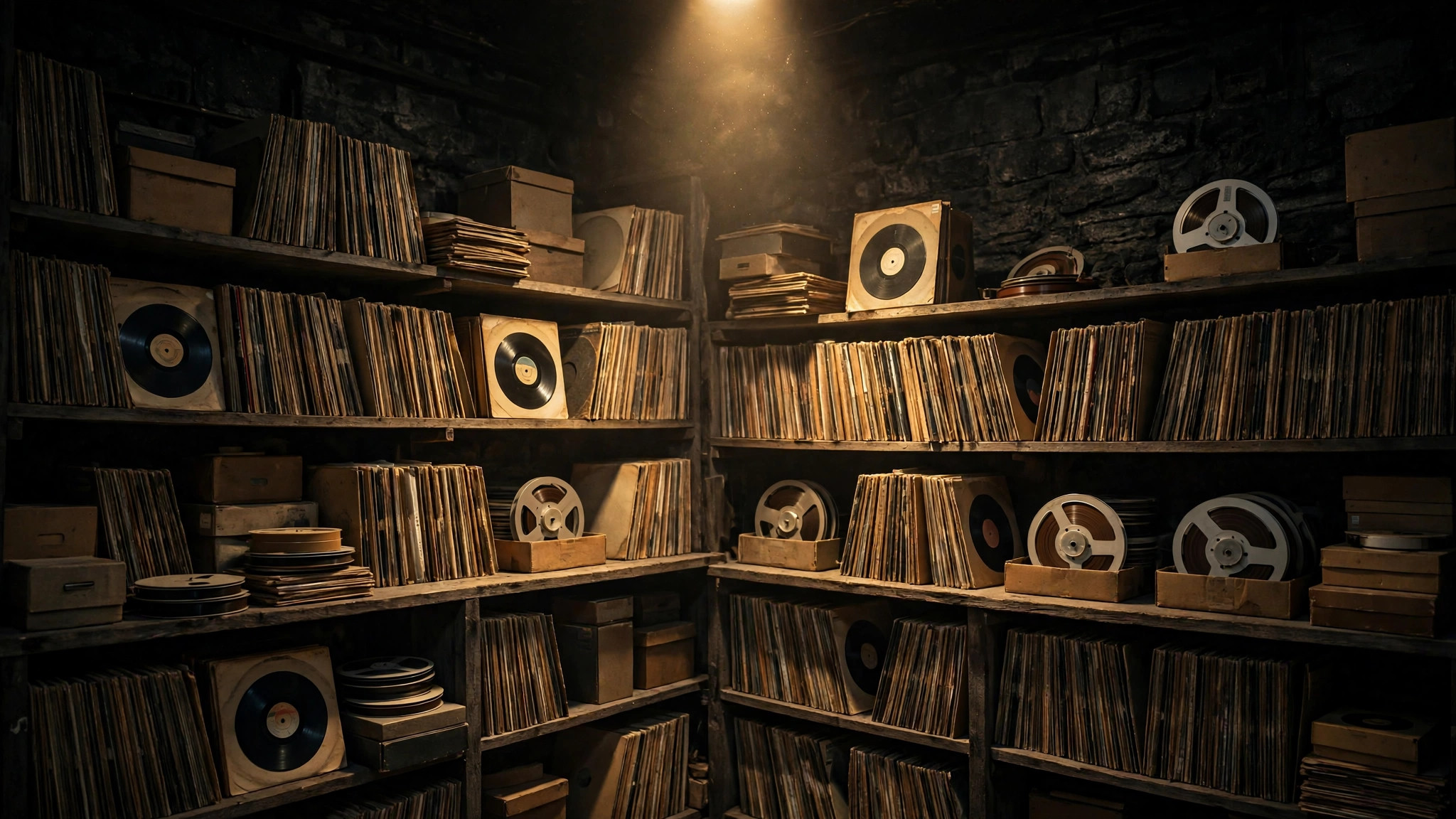
The Elvis Presley estate just sued an AI company for allegedly training on 274 of the King’s songs without permission. Let that sink in: one of the most valuable catalogs in music history is now a courtroom argument about who gets to feed what to a machine.
You are (probably) not the Elvis estate. But if your business has years of photos, videos, menus, jingles, or posts sitting in drives and old accounts, this lawsuit is quietly about you too. Because in the AI era, your archive stopped being storage. It’s inventory.
Training Data Is the New Licensing Fight
AI models are built by consuming enormous amounts of creative work — songs, photos, video, writing. For years, that consumption happened in a legal gray zone with a “everybody’s doing it” shrug. The Elvis suit is one of the first major estate-led challenges, and it won’t be the last. The direction of travel is clear:
- Creative work has training value. What you made can teach a machine — and that teaching has a price tag attached in court.
- Ownership paperwork matters now. Who owns your old campaign photos? The photographer? The agency? The intern from 2016? If you can’t answer, that’s a problem with a dollar sign on it.
- Permissions are becoming products. Licensing archives for AI training is emerging as an actual revenue category for estates and publishers.
What a Small Brand Should Do This Month
- Inventory the archive. Every hard drive, cloud folder, and dusty external with brand photos and video. You can’t protect or monetize what you can’t find.
- Sort the rights. Work you created in-house is yours. Work from freelancers and agencies depends on the contract — check before you assume.
- Say no in writing where you mean no. Your website’s terms and robots settings are first lines of defense for what crawlers and trainers may take.
- Keep creating originals. Fresh, distinctly human work — real photos of your real place — is exactly what AI can’t fake and what audiences increasingly reward.
The Vegas Angle
This town runs on legacy: vintage signs, legendary performers, decades of only-in-Vegas imagery. The brands sitting on rich local archives are sitting on leverage — for licensing, for content, for AI search visibility. The ones who treated their history as junk in a drawer will wish they hadn’t.
Stardust Fallout has shot Las Vegas for 25+ years — and we help brands turn their archives into assets instead of afterthoughts. Sitting on a goldmine of old content? Let’s dig it out.
Quick Questions
Can AI companies legally train on my business’s photos?
It’s actively being fought in court — the Elvis estate suit is a major test case. The safe move is to control your originals, know your rights, and set clear terms on your site.
Is my old content really worth anything?
Potentially, yes — as licensing material, as content you can republish, and as the source material AI search uses to describe your business. An organized archive beats a forgotten hard drive every time.
Where do I start?
Find everything, sort out who owns what, and back it up in one organized place. Then decide what the world may use — and on what terms.
